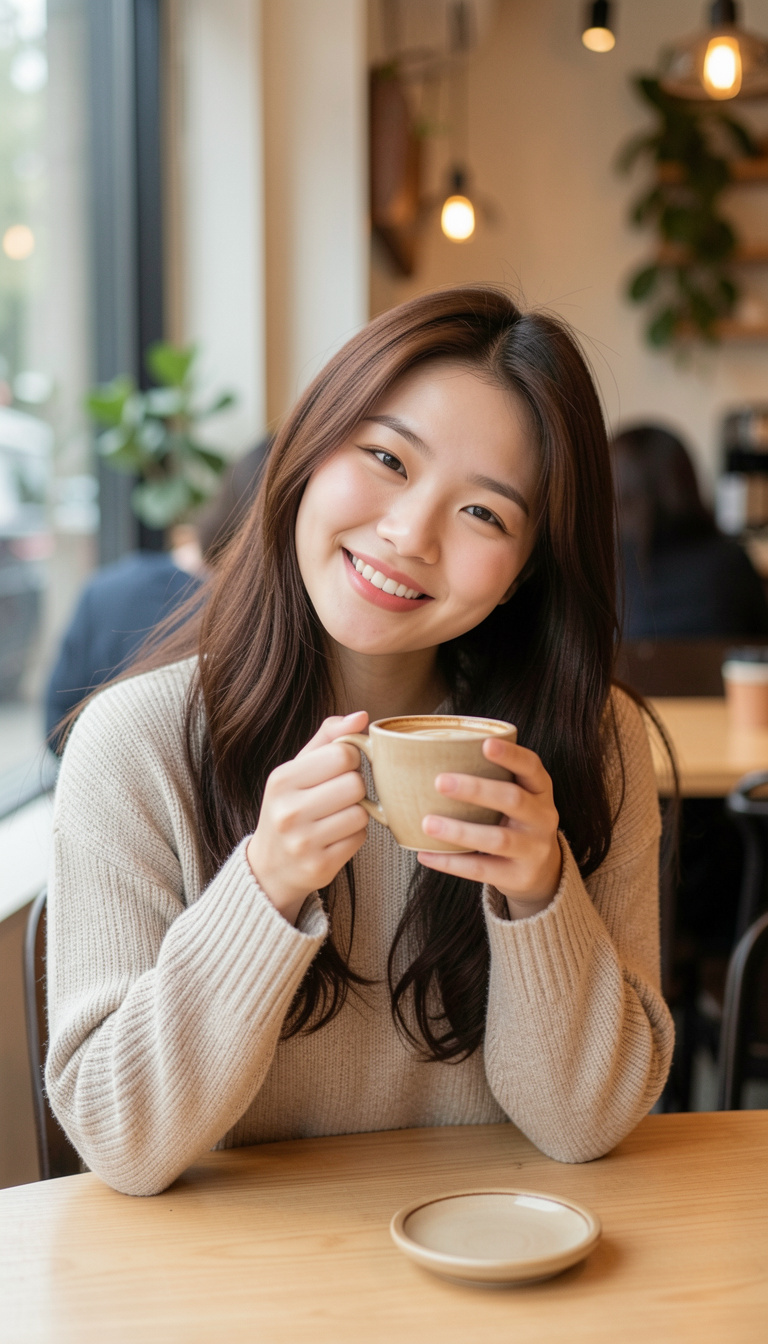
The most common thing people say when they book a session with me is some version of 'I'm terrible in photos.' And almost every time, by the end of the shoot, they're looking at images going 'oh — I actually like that one.'
The problem is almost never what people think it is. It's not their face, their body, their inability to smile correctly. It's something much more specific — and once you understand what's actually happening, it's very fixable.
Here's what I've learned after shooting dating profile photos in Sydney for the better part of a decade.
The problem is almost never what people think it is. It's not their face, their body, their inability to smile correctly. It's something much more specific — and once you understand what's actually happening, it's very fixable.
Here's what I've learned after shooting dating profile photos in Sydney for the better part of a decade.
The real reason you look tense.
When a camera appears, most people do the same thing: they stop moving, hold their breath slightly, and wait to be told what to do. The body reads this as threat response — shoulders come up, jaw tightens, eyes go slightly wide. The result is a photo that looks like someone who is waiting to be photographed, which is exactly what's happening.
The fix is not to relax. Telling someone to relax makes it worse. The fix is to give the body something to do — because a body that's doing something can't simultaneously be bracing itself.
This is why I keep people moving between shots. Walk towards me, then stop. Look at something just past my shoulder, then back. Pick up your coffee, put it down. None of these things are the photo — they're the reset between photos. The good shots almost always happen in the transition.
When a camera appears, most people do the same thing: they stop moving, hold their breath slightly, and wait to be told what to do. The body reads this as threat response — shoulders come up, jaw tightens, eyes go slightly wide. The result is a photo that looks like someone who is waiting to be photographed, which is exactly what's happening.
The fix is not to relax. Telling someone to relax makes it worse. The fix is to give the body something to do — because a body that's doing something can't simultaneously be bracing itself.
This is why I keep people moving between shots. Walk towards me, then stop. Look at something just past my shoulder, then back. Pick up your coffee, put it down. None of these things are the photo — they're the reset between photos. The good shots almost always happen in the transition.
About the smile.
A forced smile is easy to spot because it involves only the mouth. A real smile involves the eyes — specifically, the small muscles around the outer corners that you can't consciously control. You can't make this happen by deciding to smile harder.
What you can do is create the conditions for it. I ask people questions they actually have to think about — not 'tell me something funny' (which produces a performance) but something specific and genuine. What are you doing next weekend? What did you have for breakfast? What's the last thing that made you properly laugh?
The slight distraction of actually answering a question takes just enough focus away from the camera that the expression becomes real. It sounds like a small thing. In photos it's a completely visible difference.
A forced smile is easy to spot because it involves only the mouth. A real smile involves the eyes — specifically, the small muscles around the outer corners that you can't consciously control. You can't make this happen by deciding to smile harder.
What you can do is create the conditions for it. I ask people questions they actually have to think about — not 'tell me something funny' (which produces a performance) but something specific and genuine. What are you doing next weekend? What did you have for breakfast? What's the last thing that made you properly laugh?
The slight distraction of actually answering a question takes just enough focus away from the camera that the expression becomes real. It sounds like a small thing. In photos it's a completely visible difference.
Eye contact with the camera is harder than it looks.
Most people either stare directly into the lens (which reads as intense rather than warm) or avoid it entirely (which reads as evasive). The sweet spot is softer — looking at the lens but thinking about something slightly beyond it, or shifting focus just off-centre.
The other thing that helps: don't look at the camera between shots. Look away, look at something in the environment, let your face reset. The worst photos are usually taken right after someone has been holding eye contact with the lens for thirty seconds while I adjust settings. By that point every muscle in their face is working too hard.
Give yourself permission to look away. I'll tell you when I'm actually taking the shot.
Most people either stare directly into the lens (which reads as intense rather than warm) or avoid it entirely (which reads as evasive). The sweet spot is softer — looking at the lens but thinking about something slightly beyond it, or shifting focus just off-centre.
The other thing that helps: don't look at the camera between shots. Look away, look at something in the environment, let your face reset. The worst photos are usually taken right after someone has been holding eye contact with the lens for thirty seconds while I adjust settings. By that point every muscle in their face is working too hard.
Give yourself permission to look away. I'll tell you when I'm actually taking the shot.
Posture without trying to have good posture.
When people think about posture in photos, they pull their shoulders back and lift their chin — which produces a look that reads as stiff and slightly defensive. Good photographic posture is actually more about weight than alignment.
Put your weight slightly forward, towards the camera. Not leaning aggressively — just a small shift. It opens the chest, drops the shoulders naturally, and creates a quality in photos that reads as engaged and present rather than posed.
The other posture note: don't stand with your feet together. It makes people look like they're waiting for a bus. Feet slightly apart, weight on one side, body turned very slightly away from the camera rather than face-on. These are tiny adjustments that photograph as a completely different energy.
When people think about posture in photos, they pull their shoulders back and lift their chin — which produces a look that reads as stiff and slightly defensive. Good photographic posture is actually more about weight than alignment.
Put your weight slightly forward, towards the camera. Not leaning aggressively — just a small shift. It opens the chest, drops the shoulders naturally, and creates a quality in photos that reads as engaged and present rather than posed.
The other posture note: don't stand with your feet together. It makes people look like they're waiting for a bus. Feet slightly apart, weight on one side, body turned very slightly away from the camera rather than face-on. These are tiny adjustments that photograph as a completely different energy.
What to do in the first ten minutes.
The first ten minutes of any shoot are almost always the worst — not because anything is going wrong, but because it takes time for the body to stop treating the camera as something to perform for. I never use the first ten minutes of photos. They're warm-up, not content.
If you're shooting on your own before working with a photographer: take fifty photos and delete the first forty. Or shoot video and screenshot the stills from it — video removes the 'taking a photo' moment entirely, which is usually when people tense up.
If you're working with me, just know that the first part of the session is deliberately slow. We'll walk, we'll talk, I'll take some shots but I'm not expecting anything from them. By the time we're twenty minutes in, most people have forgotten the camera is there — and that's when the actual photos start.
If you want to know more about what the full session looks like, the dating profile photography page covers the whole process from consultation to final images.
The first ten minutes of any shoot are almost always the worst — not because anything is going wrong, but because it takes time for the body to stop treating the camera as something to perform for. I never use the first ten minutes of photos. They're warm-up, not content.
If you're shooting on your own before working with a photographer: take fifty photos and delete the first forty. Or shoot video and screenshot the stills from it — video removes the 'taking a photo' moment entirely, which is usually when people tense up.
If you're working with me, just know that the first part of the session is deliberately slow. We'll walk, we'll talk, I'll take some shots but I'm not expecting anything from them. By the time we're twenty minutes in, most people have forgotten the camera is there — and that's when the actual photos start.
If you want to know more about what the full session looks like, the dating profile photography page covers the whole process from consultation to final images.